
Inspection that checks the whole system
We look beyond the shingles: decking condition, flashing points, penetrations, gutters at the edges, and ventilation indicators inside the attic when accessible.
Serving Milwaukee, Wisconsin & surrounding areas
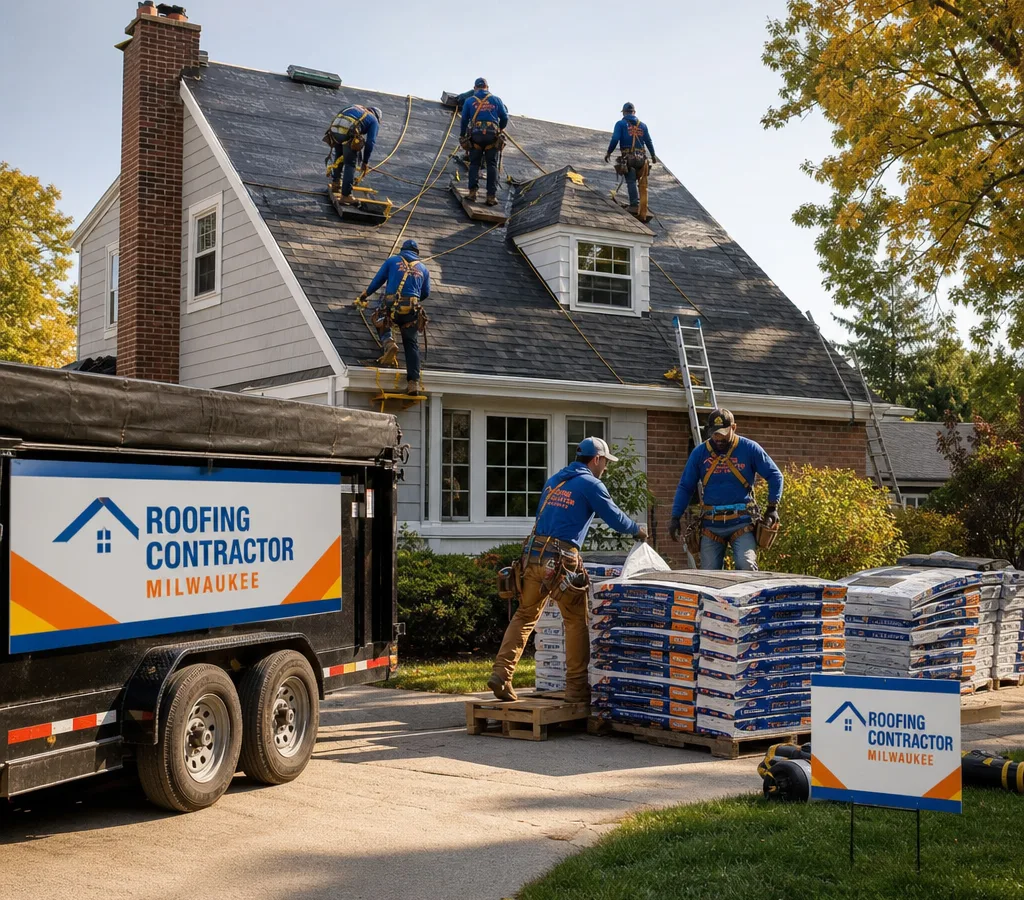
Residential Roofing · Milwaukee, WI
Get a roof that sheds water, handles wind, and looks right on your home. We inspect the full system, explain options in plain terms, and install with clean lines and careful property protection.
Milwaukee Roof Protection
When people search for residential roofing Milwaukee WI, they usually want two things: a roof that stops leaks now and a plan that prevents the next one. Milwaukee homes take a beating from freeze-thaw cycles, wind-driven rain off the lake, and heavy snow loads. Those conditions make details matter: underlayment selection, ice-and-water barrier placement at eaves and valleys, correct flashing, and attic ventilation that keeps moisture from building up.
Roofing Contractor Milwaukee focuses on the full residential roof system, not just the shingles you can see. We start with a real inspection, then give you a written scope that covers the tear-off, if needed, deck review, ventilation plan, flashing and drip edge, and final cleanup. If you are comparing roofing contractors in Milwaukee WI, ask whether the scope names these components and how they will be handled on your home.
Residential Roof Services
Residential roofing covers repairs, replacements, and the details that connect the roof to the rest of the house. The right scope depends on what is failing and why.
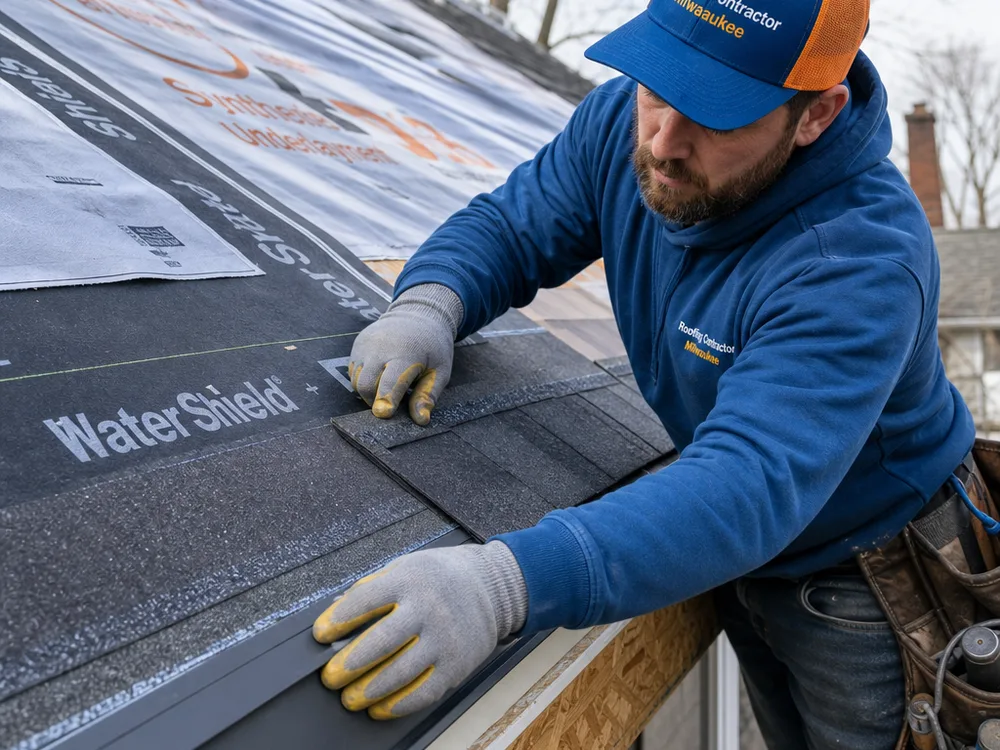
Roof replacement: We confirm decking condition, choose the right underlayment and ice barrier for the roof geometry, and install new shingles with correct nailing patterns, starter strips, ridge caps, and ventilation.
Leak tracing and roof repairs: A ceiling stain rarely points to the exact entry point. We inspect valleys, step flashing, chimney flashing, pipe boots, skylight flashings, and exposed fasteners, then repair the cause rather than sealing over symptoms.
Flashing and edge metal: We rebuild drip edge, rake edge, chimney, and wall transitions so water has a clear path off the roof.
Ventilation and moisture control: We assess intake and exhaust ventilation and account for blocked soffits, crushed baffles, or insufficient exhaust in the roofing plan.
Storm and wind damage guidance: We document missing or creased shingles and related conditions with inspection photos for clear decision-making.
Project Protections
We look beyond the shingles: decking condition, flashing points, penetrations, gutters at the edges, and ventilation indicators inside the attic when accessible.
You get a scope that spells out tear-off, underlayment type, ice barrier locations, flashing approach, and what is included at ridges, valleys, and transitions.
Landscaping and hardscapes are protected during tear-off, debris is managed throughout the day, and the site is cleaned and magnet-swept before we leave.
Many local homes have complex rooflines, dormers, chimneys, and additions. We plan step flashing and counterflashing so the roof and walls work together.
If a targeted repair makes sense, we say so. If repairs will keep stacking up, we explain what we see and why replacement is the better long-term call.
Roof-System Decisions
Asphalt shingles balance durability, repairability, and cost for many Milwaukee homes, but the components beneath and around them determine how well the complete system performs.
Discuss Your Roofing ProjectArchitectural shingles are a common upgrade for a dimensional appearance and typically higher wind ratings than basic 3-tab options. We recommend a shingle that matches your roof pitch and exposure.
In a climate with ice dams and repeated freeze-thaw, the underlayment system matters. We specify where ice-and-water membrane goes, commonly along eaves and in valleys, and how it ties into drip edge and starter courses.
Good roof work depends on metal details. We focus on step flashing at sidewalls, apron flashing at chimney bases, and proper layering so water cannot run behind the system.
Intake at soffits plus exhaust at ridges or other approved points helps control attic moisture. We flag bathroom fans venting into the attic, insulation blocking soffit flow, and other conditions that can appear as roofing symptoms.
If you are planning a full change-out and want a clearly defined scope, the crew handling Milwaukee residential roofing can walk you through options without pushing a one-size-fits-all package.
Inspection-to-Closeout Process
01
We inspect shingles, flashings, penetrations, and edges and photograph problem areas. When attic access is available, we check ventilation and moisture indicators that affect roof life.
02
You get a scope matching what the roof needs: repair, partial work, or full replacement. We discuss material choices and upgrades that solve specific observed issues.
03
Before work day, we plan staging, dumpster placement if needed, and protection around landscaping, patios, and driveways.
04
We install the roof system per the scope, pay special attention to valleys and wall transitions, and perform checks during and after installation.
05
We clear debris, perform magnetic pickup around the work zone, and review the completed work and what to watch after heavy rain or snow melt.
Inspection-Based Pricing
Most residential roofing projects in Milwaukee typically range from $7,500 to $18,000+ for a full replacement on an average home, with smaller roofs and simpler tear-offs at the lower end and larger, steeper, or cut-up roofs at the higher end. A minor repair is often $300 to $1,200+, depending on access and what needs rebuilding.
Your final cost depends on roof size and pitch, number of layers to remove, decking repairs, shingle type, flashing complexity around chimneys and dormers, ventilation changes, and jobsite access for material handling and debris removal. The exact price is confirmed after an on-site inspection and a written scope.
Roofing Questions
Answers about repair decisions, ice dams, project timing, decking, estimates, and storm documentation.
If the issue is isolated to a specific flashing point or a small area of damaged shingles, a repair can be the right choice; if the roof has widespread granule loss, repeated leaks in different areas, or failing details across multiple penetrations and edges, replacement is usually more cost-effective. An on-site inspection with photos is the fastest way to confirm whether the roof system is failing in one spot or across the whole field.
Ice dams form when heat and moisture in the attic contribute to uneven roof temperatures, melting snow that refreezes at colder eaves. Practical roofing-side protections include correct ice-and-water membrane placement at eaves and valleys plus a ventilation and air-sealing plan. During inspection, we look for blocked soffits, insufficient exhaust, and wet insulation indicators.
Many residential roof replacements are completed in 1 to 3 days, but timelines depend on roof size, steepness, the number of layers to tear off, and how much flashing or decking repair is needed. Weather can also affect scheduling because tear-off and underlayment steps need dry conditions.
Yes, decking issues are handled as part of the job when discovered, and we discuss the approach in advance so you know how it will be scoped and approved. Older homes and past leak areas can hide soft spots around chimneys, valleys, and eaves, so we plan for an honest deck evaluation once the existing roof is removed.
A solid estimate should specify tear-off scope, underlayment type, ice-and-water barrier locations, drip edge and flashing work, ventilation plan, shingle type, and cleanup. If any item is vague, ask how valleys, wall transitions, and penetrations like plumbing vents will be rebuilt.
Yes. If your roof has missing shingles, lifted tabs, or damaged flashings after a wind event, we document conditions during the inspection with clear photos and notes so you have a record of what was found and what repairs or replacement would involve.
Plan Your Roof Work
Tell us what you are seeing, and we will inspect the roof, share photos of the problem areas, and provide a written scope for repair or replacement so you can make a confident decision.