
Material choices explained in plain terms
We walk you through standing seam vs exposed-fastener panels, coating and finish considerations, and how each system is typically maintained in Wisconsin conditions.
Serving Milwaukee, Wisconsin & surrounding areas
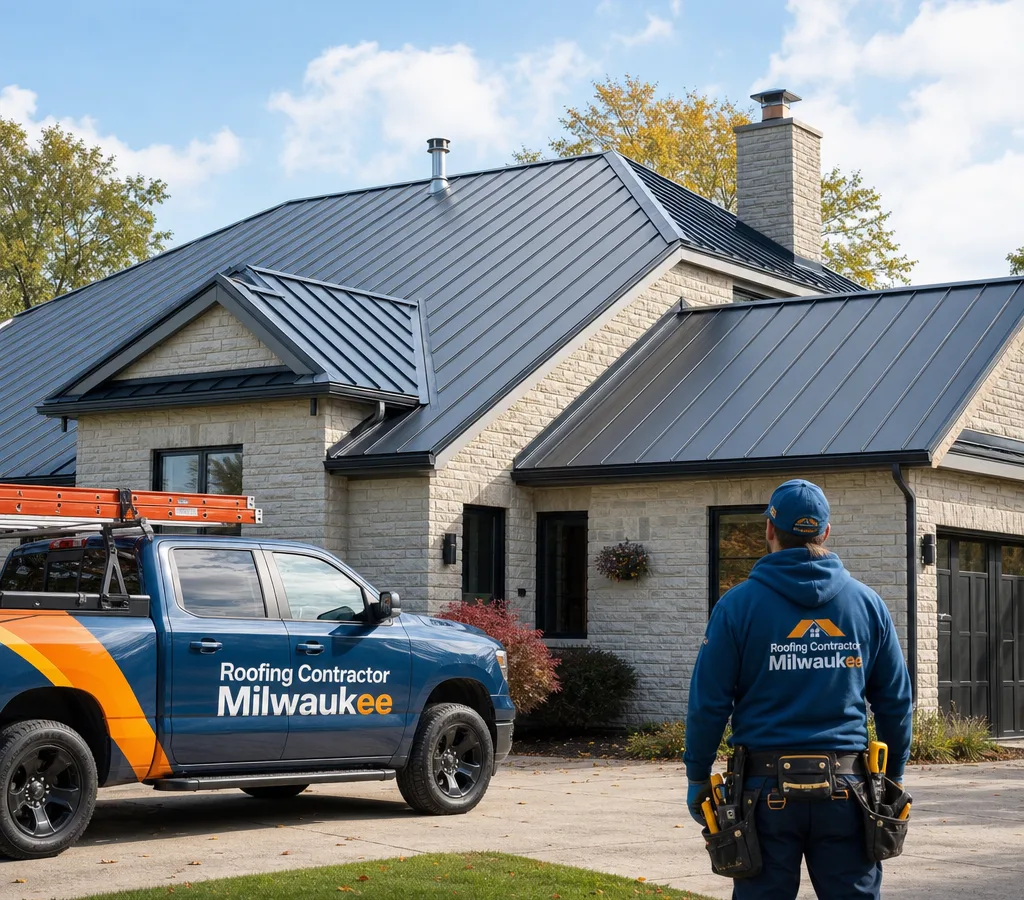
Metal Roofing Service · Milwaukee, WI
Get a roof that handles lakefront wind, freeze-thaw cycles, and heavy snow shedding. We install and repair metal roofing with clear options, clean job sites, and a written scope before work begins.
Metal Roofing Guidance
A Milwaukee metal roof is often chosen for long service life, low maintenance, and reliable performance through Wisconsin weather swings. The details matter: correct underlayment for ice dams, tight flashing at chimneys and sidewalls, and ventilation that matches the roof assembly.
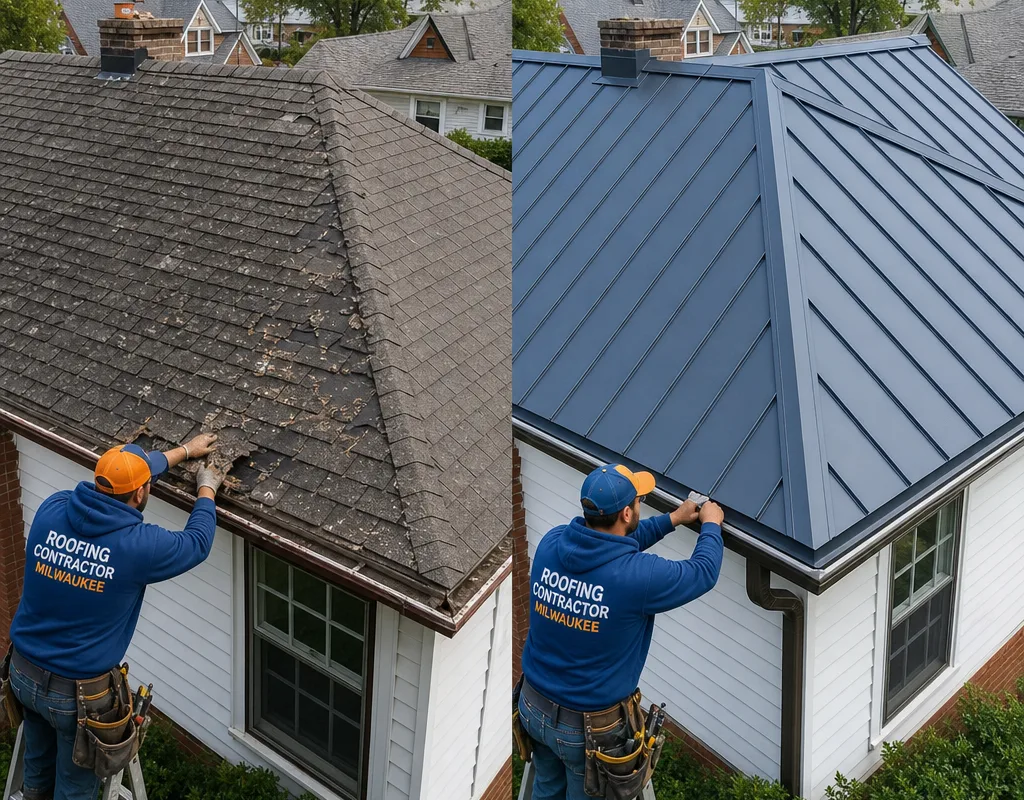
Roofing Contractor Milwaukee installs and services metal roofing across Milwaukee, WI, including ZIP 53208. We help you compare profiles, colors, and attachment methods, then build a written plan for how the roof will be stripped or overlaid, how penetrations will be handled, and what gets replaced at the edges, including drip edge, fascia transitions, and gutters when needed.
If you are also comparing contractors for other roof types, start with a broader view of roofers in Milwaukee WI and then circle back to metal once you have narrowed down what your roof structure and budget can support.
Metal Roofing Capabilities
Metal roof work is more than setting panels. A good install is built around water control, movement, and correct fastening.
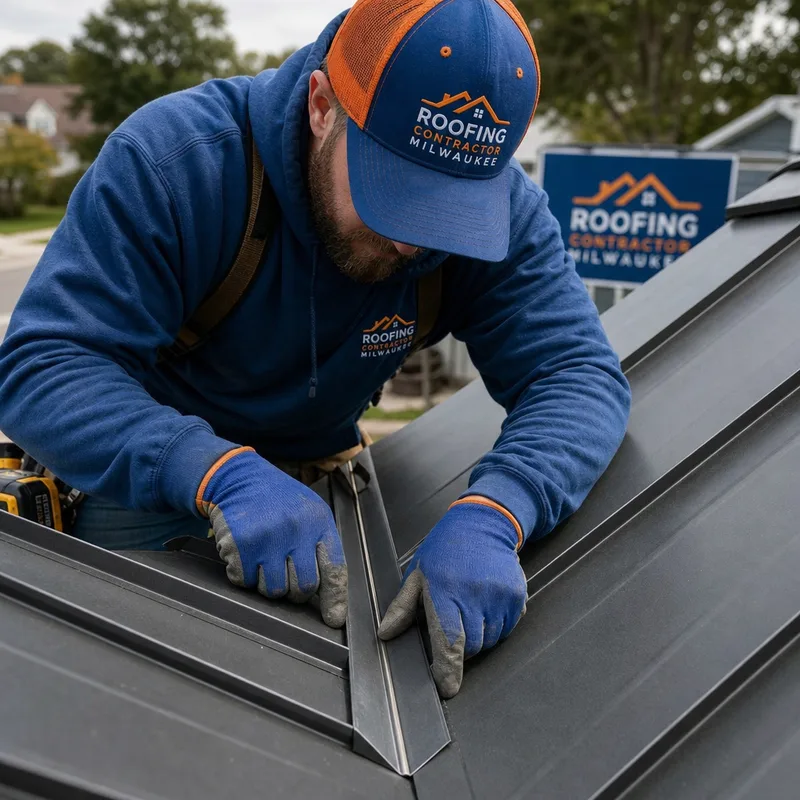
We install standing seam and exposed-fastener metal roof systems for homes and small commercial buildings. We confirm roof pitch, deck condition, and ventilation, then build a layout that minimizes awkward cuts and reduces leak risk at hips, valleys, skylights, and chimneys.
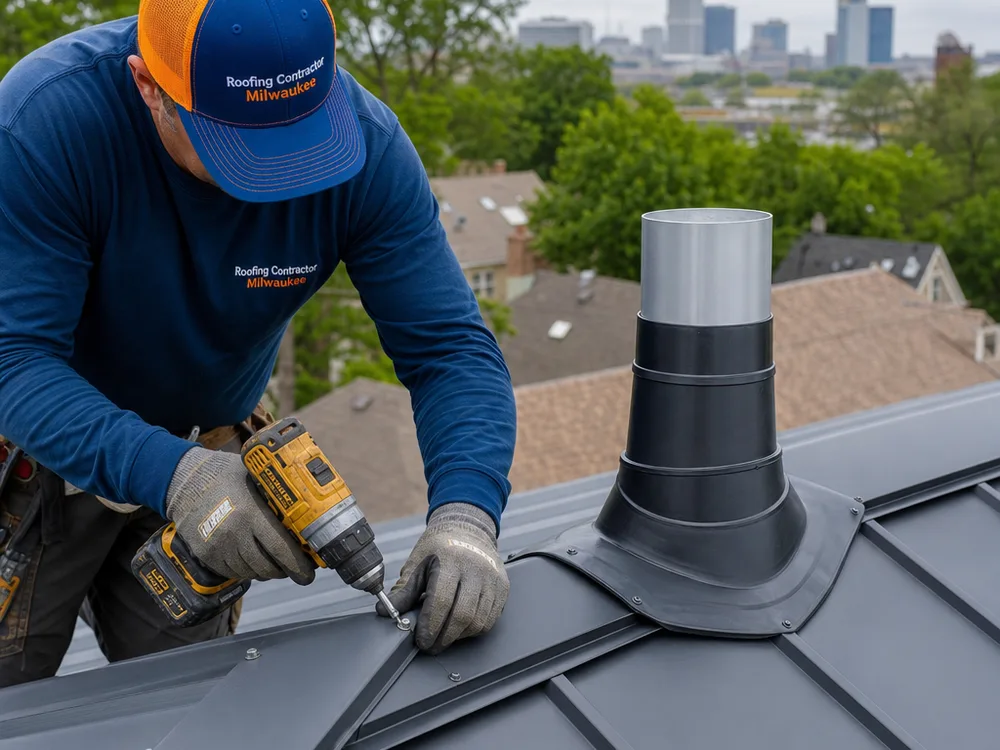
Common issues include loose or backed-out screws on exposed-fastener systems, failed pipe boot flashings, sealant breakdown at terminations, and wind-lifted trim at rakes and eaves. We track the leak to the entry point, not the ceiling stain, then repair it with the correct parts and methods.
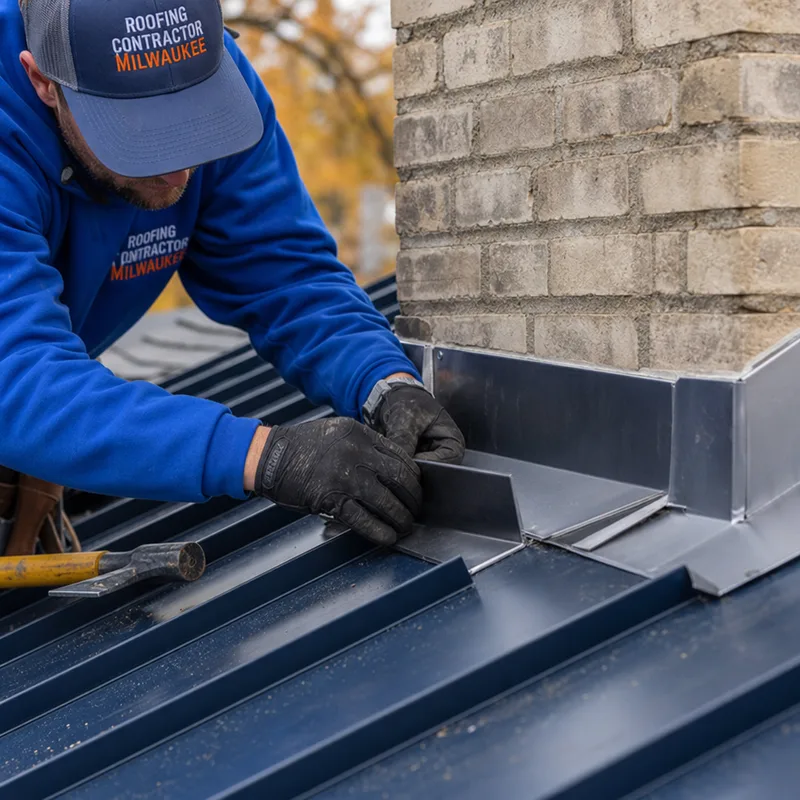
Most leaks happen at details such as chimney cricket areas, sidewall flashing against brick, and transitions into lower-slope porch roofs. We replace failing flashing, correct step flashing, and rebuild terminations so water sheds properly.
Metal sheds snow quickly. Over entries, sidewalks, or driveways, we can discuss snow guards and placement so sliding snow does not create safety problems or tear off gutters.
We commonly work in areas with a mix of older and newer rooflines such as Bay View, the East Side, and Wauwatosa, where roof geometry and existing penetrations can determine whether a roof stays watertight year after year.
Metal Roof Protections
We walk you through standing seam vs exposed-fastener panels, coating and finish considerations, and how each system is typically maintained in Wisconsin conditions.
Eaves and valleys need the right membranes and overlap strategy to reduce ice-dam related leaks during freeze-thaw stretches.
Chimneys, walls, skylights, and vent stacks get the correct metal flashing approach for the assembly, not a quick patch that fails early.
We look at intake and exhaust balance and attic conditions so the roof system is less likely to trap moisture that can damage decking and insulation.
Panel layout, trim alignment, and termination details are planned before installation so the roof looks intentional and sheds water properly.
You get a written scope describing tear-off or overlay, decking contingencies, flashing approach, and what is included at edges and penetrations.
Inspection-Based Pricing
Metal roof installation in Milwaukee typically ranges from about $10 to $20+ per square foot installed, depending on roof size, pitch, and the metal system chosen. Exposed-fastener panels are usually at the lower end, while standing seam systems and complex rooflines with multiple valleys, dormers, or skylights trend higher.
Final pricing changes with tear-off vs overlay, decking repairs, chimney and wall flashing scope, underlayment choice for ice-prone eaves, and access around the home. The exact cost is confirmed after an on-site roof inspection and measured scope.
Inspection-to-Closeout Process
01
We check the roof deck condition, penetrations, flashing, attic ventilation basics, and take measurements for an accurate layout and materials list.
02
You get system options, color and finish considerations, and a written scope that calls out edges, underlayment, and the flashing approach.
03
We protect landscaping and access points, then handle tear-off or substrate prep based on the agreed scope. If damaged decking appears, we review the change before proceeding.
04
Panels, trim, and flashings are installed to manufacturer requirements, with attention to movement, fastening patterns, and watertight terminations at walls and chimneys.
05
We clean up, complete a magnet sweep where needed, and explain ongoing care, including fastener checks for exposed-fastener roofs and keeping valleys clear.
Installation Details
Metal Roofing Questions
Answers about winter performance, metal roof systems, overlays, installation timing, leaks, snow guards, and rain noise.
Yes, metal roofing performs well in Milwaukee when it is installed with the right underlayment at eaves and correct flashing at valleys and penetrations. The main winter-specific considerations are ice-dam protection at the lower roof edge and planning for snow shedding, since metal can release snow in large slides.
Standing seam is typically the longer-term, lower-maintenance choice because the fasteners are concealed and the panels accommodate thermal movement. Exposed-fastener metal roofing can be a solid value on simpler rooflines, but it generally requires periodic fastener and washer checks.
Sometimes, but it depends on roof condition, the number of existing shingle layers, local requirements, and whether the roof deck and structure can support the assembly. A site inspection is the only way to confirm whether an overlay is appropriate or a full tear-off is safer.
Many residential metal roof projects take a few days to about a week, depending on roof size, pitch, tear-off needs, and the amount of flashing and trim work. Weather and decking repairs can extend the schedule, so we plan the sequence to keep the home protected each day.
Leaks most often come from failed flashing at chimneys and wall transitions, worn pipe boot flashings, or fastener issues on exposed-fastener systems. In freeze-thaw conditions, small gaps can become active leaks, so repairing the entry point matters.
Snow guards are recommended when sliding snow could land on entries, sidewalks, decks, or driveways, or when it could pull on gutters. Placement depends on roof pitch, roof length above the area of concern, and how the space is used.
A properly installed metal roof over solid decking with the right underlayment usually sounds similar to other roofing types inside the home. Noise complaints are more common on open-framed structures with fewer layers between the panel and interior.
Yes. If you are comparing metal with other systems or need a second opinion on roof condition, our broader roofing work includes inspections and recommendations based on your roof geometry, goals, and budget.
Plan Your Metal Roof
Tell us what you are seeing and what you want from the roof, and we will inspect the details that drive performance in Milwaukee: edges, valleys, chimney and wall flashings, and ventilation. You will get a written scope and straightforward options for installation or repair.