
Inspection notes you can act on
You get clear photos, problem locations, and recommended next steps, so decisions are based on what is on the roof, not guesswork.
Serving Milwaukee, Wisconsin & surrounding areas
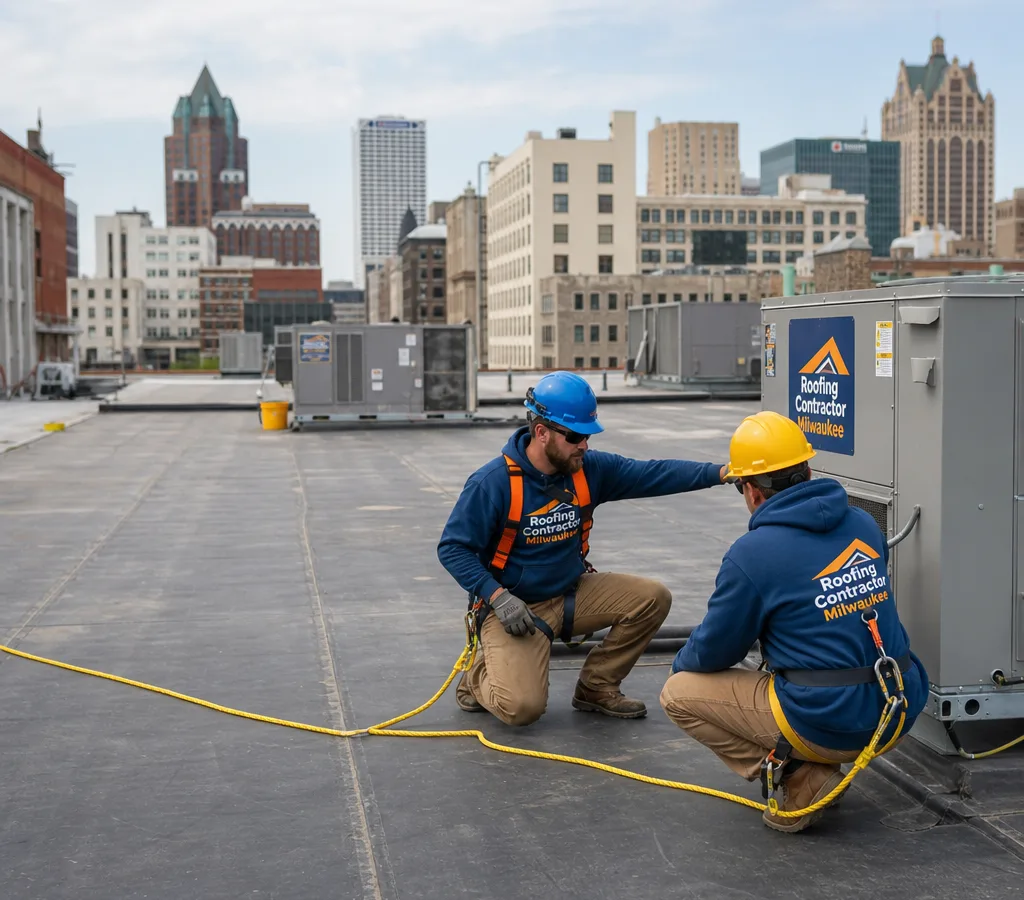
Commercial Roofing · Milwaukee, WI
Protect your building with practical recommendations, clean workmanship, and a plan that fits your roof's condition, traffic, and tenant needs.
Commercial Roof Guidance
If you are searching for commercial roofing Milwaukee WI, you are probably dealing with one of three realities: a leak that cannot wait, an aging flat roof that is becoming a budget problem, or a property where tenants and operations mean the work has to be scheduled carefully.
Roofing Contractor Milwaukee handles Milwaukee commercial roofing for offices, warehouses, mixed-use buildings, retail, and multi-tenant properties. We focus on commercial roof repairs, replacements, and maintenance that reduce disruption and give you documentation you can use for ownership, asset planning, and insurance conversations.
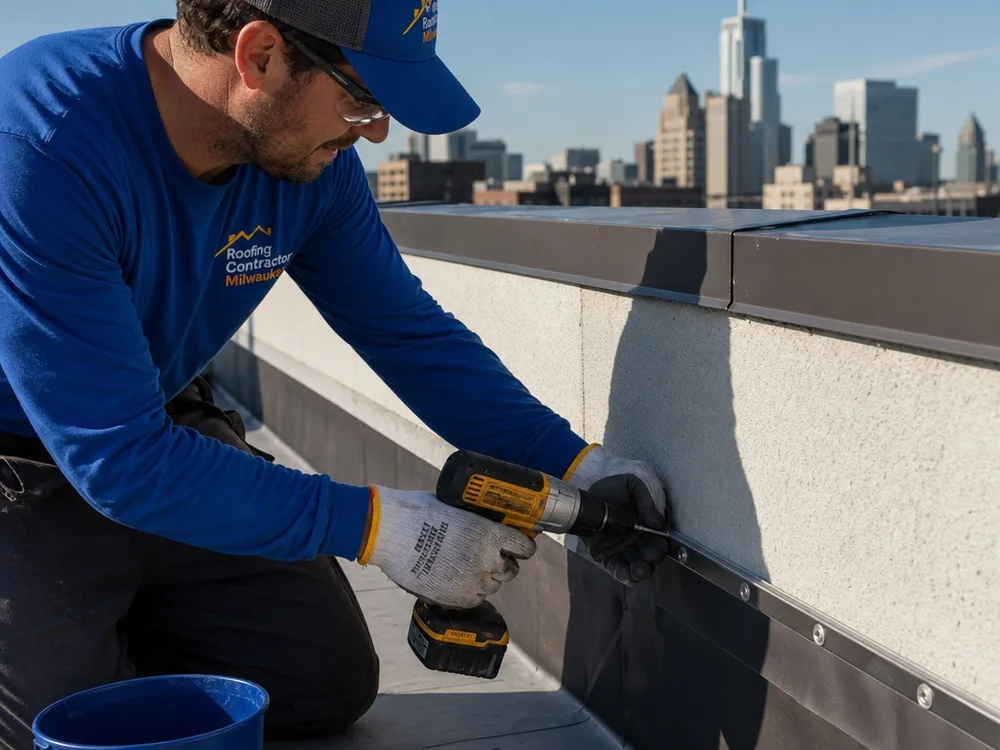
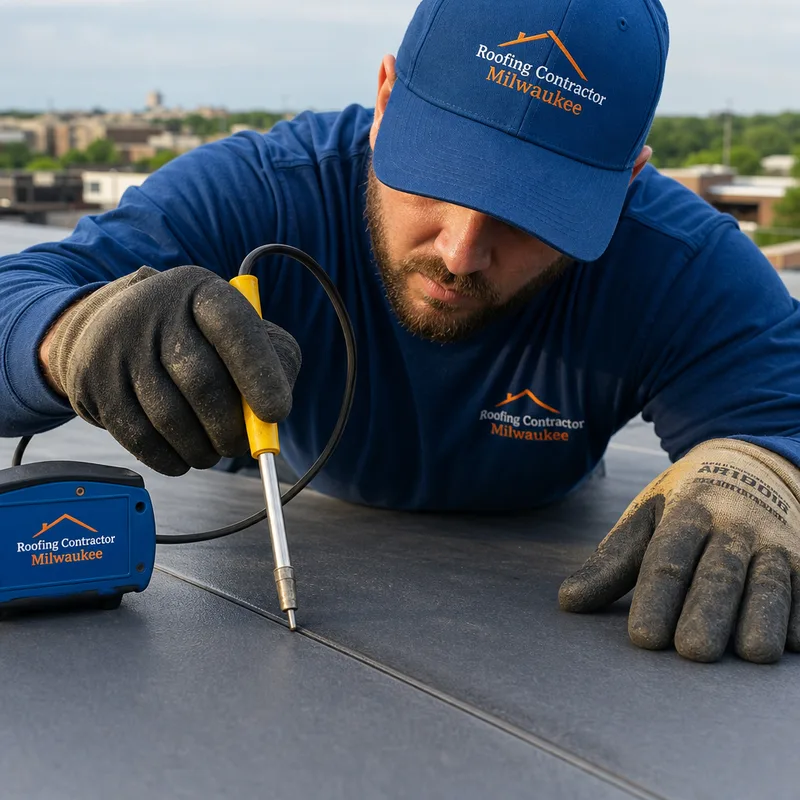
Milwaukee's freeze-thaw cycles, wind-driven rain off Lake Michigan, and rooftop equipment density all punish commercial roof details. Most failures are not dramatic membrane blow-offs. They are small issues that grow: open seams, deteriorated flashings at parapet walls, clogged drains, or fasteners backing out around terminations. A good commercial roofer finds those early, explains what is actually happening, and gives you options with a written scope.
If you also need a general roofing contractor for other property work, our team covers that broader role as a roofer in Milwaukee WI.
Low-Slope Roof Systems
Commercial roofing in Milwaukee is often low-slope. That changes how water behaves and how failures show up. Instead of shedding water quickly like a steep roof, a flat roof depends on correct slope-to-drain, watertight seams, and durable flashing details.
We service common commercial roof assemblies, including:
Milwaukee properties also see frequent roof traffic for mechanical maintenance. We pay close attention to walkway protection, puncture risk, and how curbs and pipe supports are sealed. If your building has recurring leaks, the fix often involves correcting details around penetrations and transitions, not just patching the wet spot on the ceiling.
We work across Milwaukee's commercial corridors where building types vary: industrial roofs with long runs and large drainage areas, older masonry buildings with parapets, and newer retail roofs with many curbs and rooftop units. The inspection approach changes with each.
Owner and Manager Protections
You get clear photos, problem locations, and recommended next steps, so decisions are based on what is on the roof, not guesswork.
We write scopes around access, staging, roof traffic, and drainage, including details at edges and penetrations where most commercial leaks start.
Routine checks of seams, flashings, drains, and rooftop unit curbs help reduce interior damage and after-hours disruption.
If a targeted repair or restoration buys useful service life, we will explain that path alongside replacement, including limitations and risks.
We plan around tenants, deliveries, and roof access so work stays safe and your building stays functional.
Commercial Roof Options
We start by locating the leak source, which is often offset from where water shows up inside. Water can travel along decking flutes, insulation joints, and structural members before it finds a way down. Typical commercial repair work includes seam repairs, membrane patches, flashing repairs at curbs and parapets, replacing wet insulation in localized areas, and correcting edge metal and termination issues.
Replacement becomes the smart choice when repairs turn into repeat visits, the membrane is brittle or heavily alligatored, insulation is saturated in multiple areas, or details are so widespread that patching never catches up. We will walk through tear-off versus recover when allowed and appropriate, how insulation thickness and tapering affect drainage, and how to plan the project around weather windows and building operations.
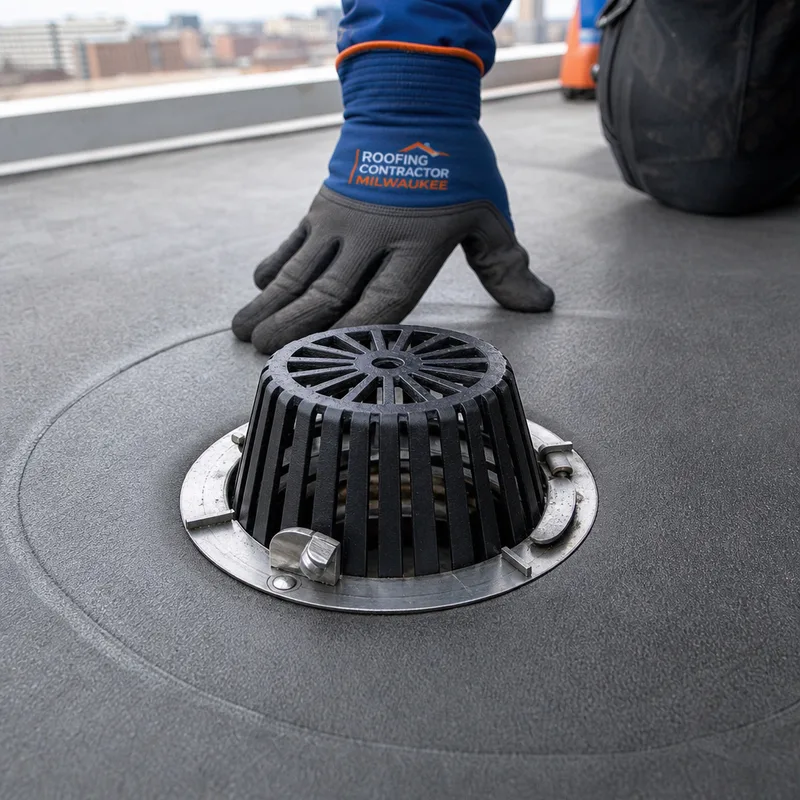
A maintenance plan is where most owners see the biggest reduction in surprises. The basics are simple but important: clearing debris at drains and scuppers, checking for punctures in high-traffic areas, looking for open laps, inspecting counterflashing and copings, and documenting any changes made by other trades. This is especially relevant after Milwaukee storms where wind can lift edge details or blow debris onto the roof.
We focus on the roof as a system. A small gap at a termination, a cracked pipe boot, and a clogged drain can combine into one interior leak event. Finding those combinations early is usually cheaper than reacting after ceiling tiles are stained and tenants are upset.
Site Visit to Closeout
01
We review access points, safety needs, roof sections, drainage paths, penetrations, and any rooftop equipment that affects details and traffic.
02
We look for the real entry point: seam separation, flashing failure, punctures, saturated insulation, or edge issues. When needed, we separate active leaks from older water staining.
03
You receive a scope that describes what will be repaired or replaced, what details are included, and what is excluded so expectations are clear for owners and tenants.
04
We coordinate work timing, material staging, and protection of entrances and walkways. For occupied buildings, we plan to keep roof access controlled and disruption low.
05
We verify details, clean up, and provide completion notes that help with maintenance planning and future budgeting.
Inspection-Based Pricing
Commercial roofing in Milwaukee typically ranges from about $6 to $14 per square foot for replacement, with complex tear-offs, added insulation or taper, and extensive flashing work pushing higher. Smaller commercial roof repairs often fall around $450 to $2,500+, depending on leak location, roof height, and how much wet material must be removed.
Final cost depends on total roof area, membrane type, insulation condition, number of penetrations and curbs, edge metal scope, access and staging constraints, and whether work can be done during normal hours. Pricing is confirmed after an on-roof inspection and a written scope.
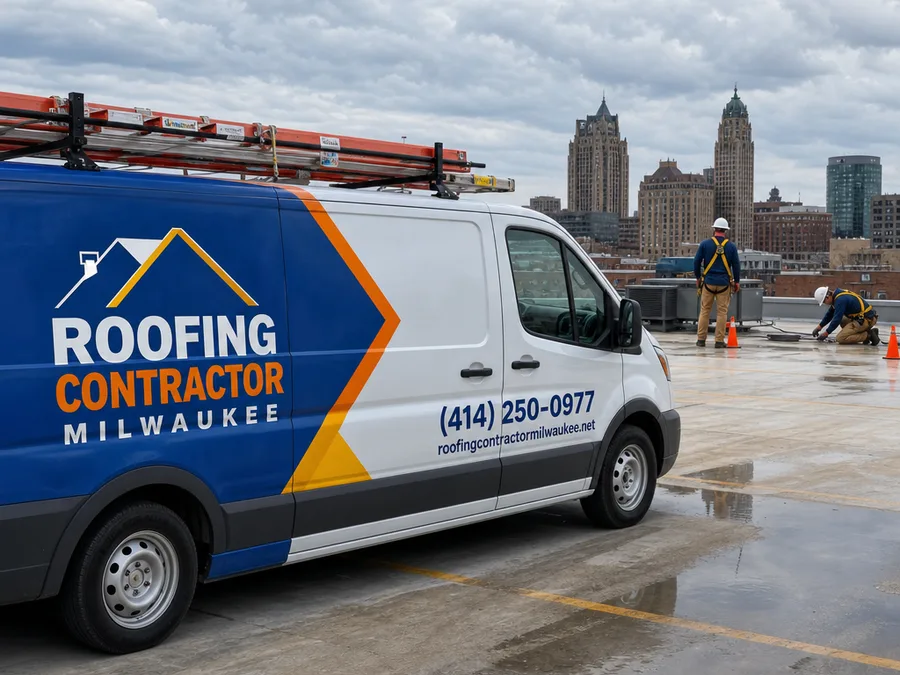
Field Inspection Details
Owner and Property Manager Questions
Answers about leak response, flat-roof drainage, occupied buildings, inspections, and written proposals.
Leak response depends on weather and roof access, but we prioritize active leaks because Milwaukee rain and wind can quickly turn a small breach into interior damage. If there is active dripping, we focus first on stopping water entry, temporarily or permanently, then follow up with a complete diagnosis and written repair scope once conditions allow safe work.
The right choice depends on how widespread the issues are and whether insulation is wet in multiple areas. A roof with isolated flashing failures or small seam openings often makes sense to repair; a roof with repeated leaks across many details may be a candidate for restoration or replacement. We will explain the risk tradeoffs in plain terms so you can decide based on budget timing and how long you need the roof to last.
Yes, most commercial roofing projects are completed on occupied buildings, but the plan needs to account for access control, noise, odor for certain adhesives or asphalt work, and protection of entrances and parking areas. We coordinate staging and work zones so tenants and staff can operate normally, and we schedule the most disruptive tasks at times that fit the property.
Ponding usually comes from inadequate slope, blocked drains or scuppers, settled insulation, or roof deck deflection. Milwaukee debris from wind events and seasonal leaf drop can clog drainage points, so part of our assessment is mapping drainage paths and identifying whether you need cleaning, localized re-slope, tapered insulation, or drain repairs.
A good proposal states the roof areas included, the system or repair method, insulation and taper scope if any, flashing details at penetrations and parapets, edge metal and termination approach, and how debris and staging will be handled. It should also clarify warranty terms when applicable and identify any exclusions such as hidden deck replacement that cannot be confirmed until tear-off.
Most owners plan inspections at least twice per year and after major storms, because small detail failures compound through freeze-thaw cycles and wind-driven rain. For roofs with heavy foot traffic from HVAC service or multiple rooftop units, more frequent checks can reduce punctures and open flashing problems.
Plan Your Commercial Roof Work
Share what you are seeing—leaks, ponding, membrane condition, or tenant constraints—and we will schedule an on-roof evaluation with a written scope you can budget around.